In today’s fast-paced and highly competitive business environment, companies that rely on transportation, delivery, or field services are under constant pressure to work faster, smarter, and more efficiently. Whether it’s e-commerce businesses fulfilling thousands of orders, logistics companies managing fleets, or service providers sending technicians to customer locations, one challenge is common: planning the most efficient routes. This is where route optimization software becomes a powerful and essential tool.
Route optimization software helps businesses determine the best possible routes for their drivers by analyzing traffic patterns, delivery windows, distance, fuel consumption, and several other real-world factors. Instead of relying on manual planning or guesswork, companies can use technology to automate route planning and ensure that every vehicle is used at its maximum efficiency.
What Is Route Optimization Software?
Route optimization software is a digital solution designed to calculate the most efficient paths for vehicles to take when performing deliveries or service visits. Unlike simple navigation apps that provide the shortest distance from point A to point B, route optimization software considers multiple advanced variables, such as:
-
Traffic conditions
-
Delivery time windows
-
Driver schedules
-
Vehicle capacity
-
Road restrictions
-
Weather conditions
-
Fuel costs
By analyzing these factors instantly, the software creates optimized routes that save time, reduce operational costs, and improve overall productivity.
Why Businesses Need Route Optimization Software
Manual route planning is time-consuming, prone to human error, and often inefficient. Businesses that handle many orders or manage fleets of vehicles cannot afford delays caused by poor planning. The use of route optimization software brings multiple advantages:
1. Significant Time Savings
Route planners and dispatchers can save hours that would have been spent manually figuring out the best routes. The software automates the process in seconds, freeing up valuable time for other operational tasks.
2. Reduced Fuel and Maintenance Costs
By identifying the shortest and fastest paths, route optimization software helps reduce unnecessary mileage. Less distance traveled means lower fuel consumption and decreased wear and tear on vehicles, ultimately reducing maintenance costs.
3. Improved Customer Satisfaction
Customers expect quick, accurate, and timely deliveries. Optimized routes help businesses meet delivery windows more consistently, leading to higher customer satisfaction. Some software even provides real-time tracking updates that enhance customer trust.
4. Better Utilization of Fleet and Workforce
Route optimization ensures that all vehicles and drivers are used efficiently. It balances workloads, prevents overburdening certain drivers, and reduces idle time. This also helps businesses scale smoothly as demand increases.
5. Real-Time Adaptability
Modern route optimization software adjusts routes in real time. If traffic is heavy, a vehicle breaks down, or a customer changes their delivery time, the system recalculates instantly and updates the driver with a new route.
How Route Optimization Software Works
The functioning of route optimization software is based on advanced algorithms, artificial intelligence (AI), and machine learning. Here is how it generally works:
-
Input Data
The business enters information such as delivery addresses, vehicle details, driver availability, customer preferences, and time windows. -
Algorithmic Processing
The system uses optimization algorithms—such as the Traveling Salesman Problem (TSP) and Vehicle Routing Problem (VRP)—to analyze thousands of possibilities. -
Route Generation
The software generates the most efficient route that meets all constraints while minimizing distance and time. -
Dispatch and Tracking
Drivers receive route instructions on their mobile devices. Fleet managers can monitor them live. -
Real-Time Updates
If the situation changes, the software updates the route and notifies both the driver and the dispatcher.
Key Features of Advanced Route Optimization Software
Modern route optimization platforms come equipped with a variety of powerful features:
1. Multi-Stop Route Planning
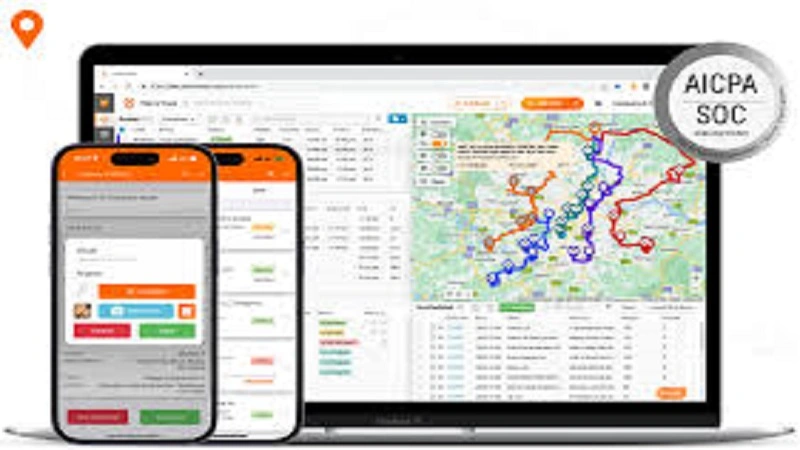
They can handle hundreds or thousands of stops in a single day and ensure the best sequence for delivery points.
2. Real-Time GPS Tracking
Fleet managers can track every vehicle’s live location, helping them make informed decisions.
3. Automated Scheduling
The system can assign jobs based on vehicle capacity, driver skills, or geographical location.
4. Proof of Delivery
Some solutions include digital signatures, photos, and notes to confirm completed deliveries.
5. Analytics and Reporting
Businesses can review performance metrics such as delivery times, fuel usage, delays, and driver efficiency.
6. Integration with Existing Systems
Many platforms integrate seamlessly with ERP, CRM, and e-commerce systems for smooth operations.
Industries That Benefit from Route Optimization Software
1. E-Commerce and Retail
To manage fast-paced delivery requirements, reduce delays, and improve customer satisfaction.
2. Logistics and Transportation
For efficient fleet management, cost reduction, and timely deliveries.
3. Food and Grocery Delivery
To maintain freshness and deliver items quickly during specific time windows.
4. Field Service Management
To schedule technicians, plumbers, electricians, etc., more effectively.
5. Healthcare and Pharmaceuticals
To deliver medications and medical supplies urgently and safely.
6. Waste Management and Utilities
To plan consistent, efficient, and reliable service routes.
Future of Route Optimization Software
As technology continues to advance, route optimization software is becoming more intelligent and accurate. Future trends include:
-
AI and machine learning for predictive routing
-
Autonomous vehicle integration
-
Enhanced IoT connectivity for real-time data
-
Sustainability-driven routing focused on carbon reduction
-
Drone and robot delivery coordination
These advancements will further streamline logistics and help businesses operate more efficiently.
Conclusion
Route optimization software has become a vital tool for any business that depends on transportation or field operations. It eliminates guesswork, cuts operational costs, improves customer satisfaction, and maximizes resource utilization. In a world where speed and efficiency matter more than ever, adopting route optimization software is no longer just an option—it is a necessity for staying competitive.
Whether you manage a delivery service, a fleet of vehicles, or a field service team, the right route optimization solution can transform your operations and lead your business toward long-term success.