
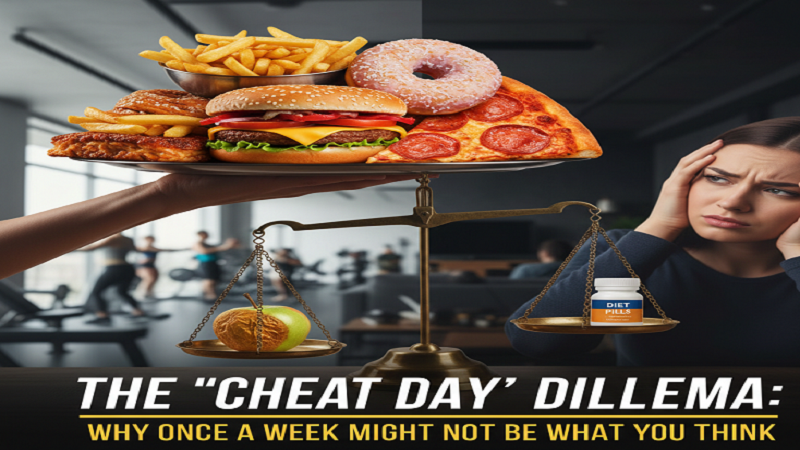
You’ve been dedicated all week. You hit your workouts, tracked your meals, and drank your water. Then Saturday comes—your designated “cheat day.” You enjoy a big breakfast, a satisfying lunch, and maybe pizza and drinks with friends. It feels earned, a necessary release. But Sunday morning, you step on the scale, and your heart sinks. The number is up three, four, even five pounds.
Immediately, guilt floods in. You feel like you’ve erased a week of hard work in a single day. This frustrating cycle is one of the most common reasons people abandon their fitness goals. It raises the central question: Can I have a cheat day once a week? Will it really sabotage your progress?
The answer is more complex than a simple yes or no. This article will demystify what’s really happening in your body after an indulgence. We’ll break down the science behind that morning-after scale shock and provide a smarter, more sustainable framework for enjoying the foods you love without the guilt. Long-term success isn’t about perfection; it’s about understanding the science and building a strategic plan that includes planned indulgences, not reactive blowouts.
The Morning-After Panic: Why the Scale Spiked (and Why You Shouldn’t Freak Out)
That moment on the scale can be incredibly discouraging. It’s easy to feel like you’ve failed and that all your discipline was for nothing. Before you throw in the towel, it’s essential to understand the biology at play. Gaining several pounds of actual body fat in a single day is nearly impossible.
To gain just one pound of fat, you need to consume a surplus of roughly 3,500 calories above your daily maintenance level. Gaining five pounds of fat would require eating around 17,500 excess calories—an amount most people would find physically difficult to consume. So, what’s really happening?
The primary culprits are water and glycogen. When you eat carbohydrates, your body stores them in your muscles and liver as glycogen for energy. The key is that for every gram of carbohydrate you store as glycogen, your body holds onto nearly 3 grams of water. A high-carb meal can easily lead to a few pounds of temporary water weight.
Additionally, the foods we typically enjoy on a cheat day—like pizza, burgers, or restaurant meals—are often high in sodium. Sodium causes your body to retain extra water. This combination of glycogen and sodium is what’s really behind that post-cheat-day weight spike. It’s temporary fluid retention, not a reflection of your true progress.
“Cheat Day” vs. “Cheat Meal”: It’s More Than Just Semantics
The terms “cheat day” and “cheat meal” are often used interchangeably, but the distinction between them is critical for both your physique and your mindset.
A “Cheat Day” is typically defined as an entire day of unrestricted eating. This often involves multiple high-calorie meals, snacks, and drinks. It encourages an all-or-nothing mindset that can easily spiral out of control, leading to a massive caloric surplus that undoes the deficit you worked to create all week.
A “Cheat Meal,” on the other hand, is a single, planned meal where you intentionally eat something you enjoy that isn’t part of your typical diet plan. It’s a controlled event, not a free-for-all.
The psychological difference is immense. A “day” feels like a rebellion, often accompanied by guilt. A “meal” feels like a planned, enjoyable part of your routine. Physiologically, the impact of one indulgent meal is far easier for your body to manage and for you to balance over the week. The caloric damage from three or four high-fat, high-sugar meals in a single day is significantly harder to overcome.
The Science of Indulgence: The Good, The Bad, and The Unproductive
To build a truly sustainable plan, it’s important to look at the evidence for and against planned indulgences. They aren’t inherently good or bad—their impact depends entirely on the approach.
The Potential Psychological and Physiological Upside
There are valid reasons why planned indulgences are a popular strategy. When done correctly, they can offer tangible benefits.
- Psychological Relief: Consistently restricting calories can lead to feelings of deprivation and burnout. A planned meal gives you something to look forward to, making your diet feel less like a punishment and more like a lifestyle you can maintain.
- Hormonal Boost: Prolonged dieting can cause levels of leptin, the “satiety hormone,” to drop. Lower leptin levels can slow down your metabolism and increase hunger. According to Northwestern Medicine, a high-calorie meal can temporarily increase leptin production by as much as 30% for up to 24 hours, giving your metabolism a short-term boost.
- Social Flexibility: A healthy lifestyle shouldn’t mean isolating yourself. A planned flex meal allows you to enjoy dinners out, birthday parties, and social gatherings without feeling anxious or overly restricted.
The Potential Downsides and Unintended Consequences
While a single meal can be beneficial, a full “cheat day” often comes with significant risks that can derail your progress.
- The Calorie Math: It’s surprisingly easy to wipe out a week’s calorie deficit in one day. A 500-calorie daily deficit for six days creates a 3,000-calorie deficit. A single cheat day with a large brunch, a fast-food lunch, and a restaurant dinner with drinks can easily top 4,000-5,000 calories, completely negating your progress.
- The Guilt-Binge Cycle: The “cheating” mindset fosters an unhealthy relationship with food by labeling things as “good” or “bad.” This moral judgment can lead to intense guilt after eating “bad” foods, which can trigger a cycle of restricting, binging, and feeling guilty all over again.
- Digestive Distress: If your body is used to clean, whole foods, suddenly overloading it with rich, fatty, or sugary meals can cause bloating, lethargy, and general digestive discomfort.
- Reigniting Cravings: For some individuals, a full day of indulging in hyperpalatable processed foods can re-trigger intense cravings, making it much harder to get back to a healthy routine the next day.
From “Cheating” to Strategy: How to Build Indulgence into Your Plan
The key to long-term success is shifting your mindset from reactive “cheating” to proactive “strategy.” It’s not about being perfect; it’s about being smart and consistent.
Reframe Your Mindset: Consistency Over Perfection
First, abandon the “cheat” label. The word itself implies you’re doing something wrong, which sets you up for guilt. Instead, use neutral terms like “planned indulgence,” “free meal,” or “flex meal.” This small change removes the negative connotation and reframes the meal as a conscious part of your plan.
Embrace the 80/20 principle. Focus on making nutrient-dense choices 80-90% of the time. This naturally leaves room for flexibility and enjoyment without derailing you. Trying to be 100% perfect, 100% of the time, is a recipe for burnout. In fact, research shows that rigid, all-or-nothing plans often fail. A two-year study published in PubMed found that while overall diet compliance was high, self-reported adherence dropped significantly over time, proving sustainability is key.
Remember, one meal does not define your health or your progress. Your overall pattern of habits is what truly matters.
5 Actionable Tips for a Smarter Indulgence
Here is a simple framework for incorporating your favorite foods into your plan without the negative consequences.
- Plan Ahead: Don’t let your indulgence be a spontaneous decision driven by a craving. Schedule it. Decide which day and which meal will be your flex meal. This turns it from a failure of willpower into a proactive, empowering part of your strategy.
- Opt for a Meal, Not a Day: This is the most important rule. Choose one specific meal to enjoy what you want. Have a regular, healthy breakfast and lunch, enjoy your planned dinner, and then get right back to your routine. This contains the caloric impact and prevents an all-day binge.
- Time It Wisely: Consider scheduling your flex meal on a day you have an intense workout. The extra carbohydrates can be used more efficiently by your body to replenish muscle glycogen stores, aiding in recovery.
- Savor It: Don’t rush through your meal while feeling guilty. Eat slowly and mindfully. Pay attention to the taste, texture, and aroma. Truly enjoying the food you’ve been looking forward to increases satisfaction and makes you less likely to overeat.
- Get Right Back on Track: The next day is not the time for punishment. Don’t starve yourself or do hours of extra cardio. This only reinforces the unhealthy binge-restrict cycle. Simply drink plenty of water to help flush out the extra sodium and return to your normal, healthy eating and exercise routine.
Your Fitness Journey is a Marathon, Not a Sprint
While a weekly “cheat day” can often be counterproductive and mentally taxing, a strategically planned “cheat meal” can be a smart, sustainable part of a healthy lifestyle. It provides psychological relief, promotes long-term adherence, and allows for the social flexibility needed to truly make fitness a part of your life.
That number you see on the scale the morning after is not a true measure of your progress. It’s a temporary fluctuation caused by water and glycogen, not a sign of failure.
Ultimately, the most important takeaway is to prioritize consistency over perfection. The choices you make most of the time are what build lasting results, not the one meal you enjoyed on a Saturday night. You can absolutely achieve your fitness goals without sacrificing every food you love—the key is strategy, not deprivation.